Danger! Foxtails

Most of us don’t need another thing to worry about, but here is something dog owners must know: Foxtail grass is dangerous.

Sharp spear-tip ends on the foxtail seed spikelets allow them to enter any orifice on a pet’s body. Once they penetrate the skin, feather-like projections facilitate movement underneath, making them difficult to locate and, like a fish hook, tough to remove. These little seed cases are often not easy to see.

This type of grass thrives during spring and early summer. When the grass dries out, it detaches from the part it once grew from and that is when it is a real danger. Passing animals (including humans) make an ideal way for the seeds to spread, as they cling fiendishly to clothing or fur.

The seed spikes can enter any facial opening, they are also found between the toes and in the anus or genitalia. They can work their way through thick fur. Really nasty, nasty little buggers– besides great discomfort, they can cause severe infections, deformation, and sometimes, death. One of the more significant dangers is if they get inhaled into the respiratory system. They can also be ingested by dogs who eat grass or lick the seed from their coat. Don’t hesitate to get immediate veterinary care if you suspect a foxtail issue.

Symptoms: If you discover unexplained swelling anywhere on your animal, or blood or pus discharge from any area; excessive sneezing; pawing at the snout, eyes, or ears; any of these can be danger signs. Also, watch for repeated licking or chewing or unexplained limping. Signs of infection can be lethargy and loss of appetite.

Cats, dogs, and livestock are all susceptible to injury from foxtail grasses. My parents had a cat, Tommy, who lived for nearly twenty years with a severely deformed nose because of a foxtail he inhaled as a young kitty. Check any animal’s coat and feet during foxtail season if they have been outdoors in an area that might have this dangerous weed.

Foxtail is an invasive weed that occurs in the western states but is found more and more often nationwide. We find three species of foxtail grass in the Pacific Northwest: yellow foxtail, green foxtail, and bristly foxtail. There are over 100 species in the setaria genus of grasses and they all have bristly spikelets. The entire group are refereed to as foxtail or bristle grasses. These three species are the ones we are on guard for in the Puget Sound area, but any bristle grass we come upon wherever we roam can cause problems for our pets.

What to do? If your dog has signs of foxtail penetration or you see embedded spikelets, take them to the vet immediately. Removal is difficult and requires special tools. Also home removal increases risk of infection.

If you have foxtail grass on your property: You will probably find that cutting or mowing before they go to seed doesn’t help—they will likely just form seed heads closer to the ground. Pulling them out is the best treatment. If this is impractical due to size of the infestation, another solution may be to plant a quick and close-growing ground cover to crowd them out.  Water deeply but infrequently: over-watering encourages foxtail growth.

To our great fortune, although they are found all along the coast, we don’t have a particularly huge amount of these grasses in the Puget Sound area–yet. We do have them right here in downtown Arlington WA, though! It seems similar to the tick situation, a growing threat which may become more and more of a nuisance and danger in our lives. If you see these grasses growing in your neighborhood, please pull them up or alert someone who can eradicate them. Also, carefully check your dog after playing in a grassy field or walking anywhere they may encounter these seed spikelets. We all need to have eagle eyes going forward.

~

~

~

Selected Sources:

  • blogs.cornell.edu/weedid/foxtails
  • hortsense.cahnrs.wsu.edu/fact-sheet/weeds-foxtail-green-yellow-bristly-setaria-spp/
  • beta.floranorthamerica.org/Setaria
  • coastviewvet.com/fighting-foxtails-keeping-your-pet-safe-this-foxtail-season
  • seattledogspot.com/foxtail-grass

Foxtail image: MabelAmber on pixabay
Dog Shoes

Dog shoes and boots are great for protecting dogs in the snow and ice. They are also good for summer heat. But please read on:

While dog shoes are a great answer for some pets, they are not without their problems. Many dogs won’t tolerate them–but as the shoes are often not particularly expensive, it may be worth getting a set just to find out. Some of these dogs can learn to accept them over time.

Just like human shoes, dog boots can rub or be too tight in some spot. Dog paws come in a variety of shapes, so size of shoe isn’t the only factor. Consider also if it’s going to be a problem if they get wet. Shoes come off and get lost, especially in snow and with certain breeds. Suspenders that run across the dog’s back can be a solution. One of the main issues about shoes, though, is ventilation.

Dogs regulate their body temperature through the paws. They have sweat glands in their paws. Also, arteries run behind the paw pads, circulating the blood back through the body to help control the temperature. Shoes designed for summer use have holes or mesh for air flow.

I do not necessarily recommend this particular brand, only that you keep ventilation and “breathe-ability” in mind while selecting shoes. (Brand shown: AOFITEE)

In my opinion, (okay, as a paw wax maker, I admit it) if pavement is so hot that it requires shoes rather than paw wax, (see my recent post Paws and Think About Hot Pavement) the danger of sun stroke should be carefully considered. In other words, if paw wax isn’t sufficient, should the dog be out there anyway?

I use shoes for dogs only if we are in snow or are protecting an injury such as an incision. For some people’s dogs, though, shoes seem to be a great choice for walking on summer pavement. Of course, I can’t help but mention that paw wax can be helpful with some of the shoe issues, such as rubbing or to prevent the ice balls that may form around the top of the shoe. (For that latter problem, I have also had good results with duct tape around the top of the boot.)

In the end, we each know our own dogs and what will serve them best. I do hope this information is helpful if you’ve been wondering about dog shoes. If I’ve left something out or you have anything you’d like to say, please contact me. I’d love to hear from you!

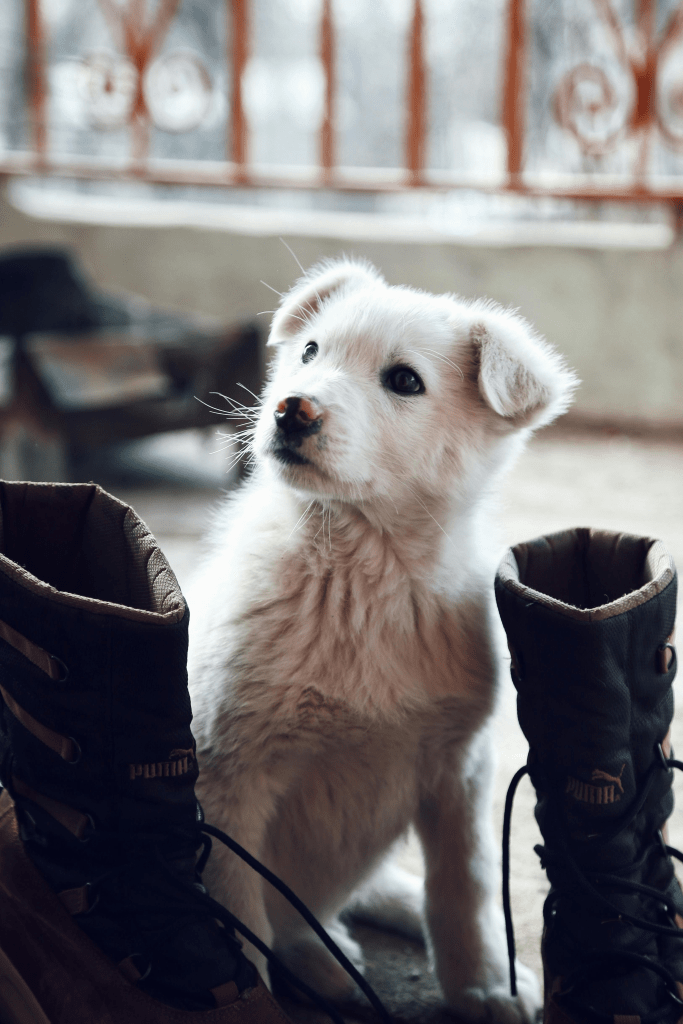
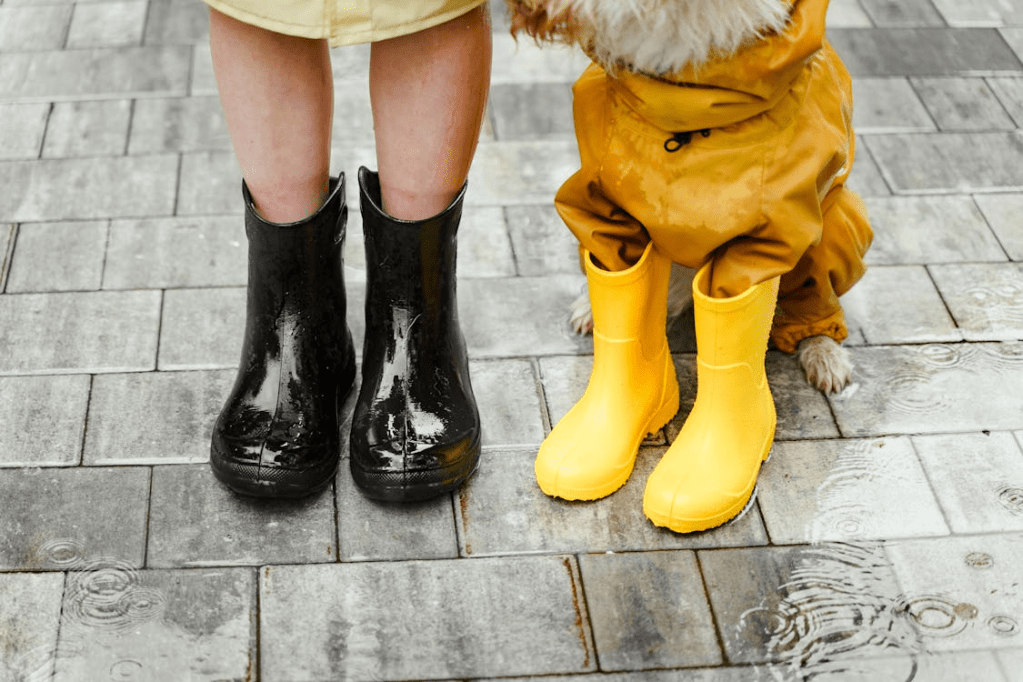
Note: Yellow boots image is by Yaroslav Shuraev VIA pexels.com. The puppy sitting between a pair of boots is by Mona on the same site. Normally I use my own images, but I couldn’t find the ones I have of Pippa in shoes and didn’t want to put them on her to take a new photo.

PS Of course the dog photos here are just for humor. I’m not suggesting using human shoes on dogs! : )

Paws and Think About Hot Pavement

What do we need to know about walking dogs on hot surfaces? What are the dangers for their paw pads? The following is what I have learned through years of experience as a dog walker and through my own research. In some ways this is a complicated subject with a lot of misinformation spread through social media. Ultimately, however, it’s all quite simple.

There are many factors involved. Here are some points regarding a dog’s tolerance for that walking surface in question:

  • Puppies have more tender pads 
  • Couch potato dogs haven’t built up tolerance
  • Genetics and breed can affect sensitivity 
  • Size and weight of dog affect resilience
  • Health issues of dog can influence risk of burns
  • Surfaces matter. eg: Fresh black asphalt vs concrete in the shade
  • Arid conditions increase risk (the PNW is not arid)
  • Length of time sun has been shining steadily on surface
  • Lack of breeze increases danger
  • Cloud cover makes a difference
  • So does time of day 
  • Standing has more risk than walking

Charts which give air temperature and an associated pavement temperature have been flooding the internet for a few years now. The problem is, few of these charts list sources. Most of them actually hearken back to a Dr. James Beren’s work on thermal contact burns published in 1970 in the Journal of the American Medical Association. Dr Beren stated that his statistics referred to a particular scenario. He stated that an air temperature of 77 degrees can, under certain conditions, result in an asphalt surface reaching up to 125 degrees. (Do remember that hot bathwater can be 110 degrees. Still, standing on 125 degree pavement can potentially damage paw pads.)

Modern experts agree that caution should be applied when temperatures enter the mid-eighties. Certainly, the above factors should also be kept in mind. Things can get very serious for any dog as the temperature continues to climb.

In Arlington, WA I have measured asphalt temperature on a clear, 80 degree F day to find it climb to 124 degrees by 2:30 and 123 degrees at 4:30. The cement sidewalk read at 100 degrees. When the temperature enters the 80s, I select shaded routes for my dogs.

As climate change affects our lives, we in the Pacific Northwest need to be aware that on days the temperatures rise to over 100 degrees, we may need to walk our pets in the early morning and late evening only.

Human skin is much more tender than a dog’s paw pad, (would you play in the snow barefoot for the amount of time most dogs would? Or without mittens?) The fat tissue in the paws also offers protection.

Although dog paws are not comparable to our own feet, this doesn’t mean they are impervious to damage. They toughen with use, but no dog is beyond getting burned if a surface is hot enough, be it pavement in town or alpine granite. It’s always important to keep the pads healthy and supple.

Dog paws have arteries which run close to their paw pads, allowing the blood to circulate back into the body and help keep the dog at a stable temperature. The inner layer of the paw has sweat glands which help the dog cool off. These regulatory functions make it even more important to protect your dog’s paws. Also, I recommend choosing the vented or the “breathable” dog shoes if you use shoes.

If your dog begins limping or walking tenderly, watch out! If their paw pads look dark, or the dog is licking them or biting them, they may already be burned. Also check for blisters or redness. 

simply test the pavement temperature

          A) You may have heard of the “seven-second test” in which you place the back of your hand on the pavement and if you can hold it there for seven seconds it will be safe for your dog to walk on this surface. The point was to make it simple, but these days some say two minutes and you can believe this version of the rule if you want. 

Of course you must also use your common sense here. For one thing, people vary with the amount of heat they can tolerate. I can pick up a jar full of hot coffee that my husband can’t handle without a hot pad. I can hold it just long enough to pour a couple of coffees. One of my sons, meanwhile, could carry it around without giving it a second thought.  

    B)  Infrared thermometers are available, starting around twenty dollars, which you can point at the road surface and get an instant reading. If you have a particularly vulnerable dog this might be a good investment.  

When it’s hot out, choose shady routes and walk on grass or dirt whenever possible. This is also important for preventing heat stroke. 

Where I live there are parking strips of grass along most of the sidewalks. This makes it easy for the dog to have their choice of walking surface. Usually, if a dog has a choice they will walk where it is comfortable for them to do so. However, factors such as physiological conditions or strong force of habit can come into play. Ultimately, it is the human caretaker who is responsible for the protection of the paws.

To keep your dog safe, it’s merely a matter of situational awareness and common sense. 

~ ~ ~ ~

Selected Sources:

https://archive.news.wsu.edu/press-release/2017/07/06/protect-pets-feet-from-heat/

https://pubmed.ncbi.nlm.nih.gov/5536473/

https://www.scrippsnews.com/science-and-tech/animals-and-insects/how-to-walk-your-dog-when-the-pavement-is-hot

https://www.ellevetsciences.com/pet-care/hot-pavement-preventing-and-treating-pad-burn-in-dogs/

Please note: This blog post is based on my own research. If you find an error or can offer information from primary sources concerning this subject I would appreciate it if you’d contact me.   

Dog is Love

March 22, 2024

One of the many things I enjoy about walking dogs is the interaction the dogs and I have with random people as we walk through the neighborhood or along the Ave in our little downtown. The joy that animals bring to people is fun to see.

When I walk black Labs it often happens that someone will stop and tell me about the Lab they used to own. The expression in their eyes is heartwarming to see as they share memories of their family’s old dog. It can happen with any dog breed, but Labs are a common and faithful pet, I guess.

Teenagers will almost always tell me that my dogs are cute. I hear about family dogs from teens, too.

The social interaction is good for the dogs, also. They light up when someone gives them attention, and their tails wag like crazy. In fact, a significant part of my job is keeping my charges from disturbing those people who walk past without saying hi.

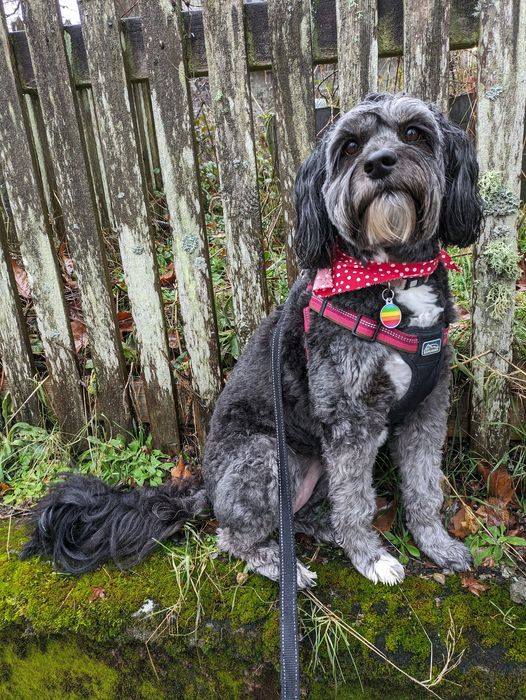
Lucy, pictured above, enjoys a bit of human admiration. She’s a gentle, quiet girl but she gives a sharp bark at other dogs we encounter as we walk along. Just one bark, maybe two. They won’t mistake her for a pushover. But I’ve started walking her with other dogs and am happy to report that she immediately bonds with her leash-mates.

Dogs love walks. Adding social interaction with humans and other dogs makes almost any dog much happier. They’re pack animals, after all. Just like us.

How Pippa Started a Business

Feb 16, 2024

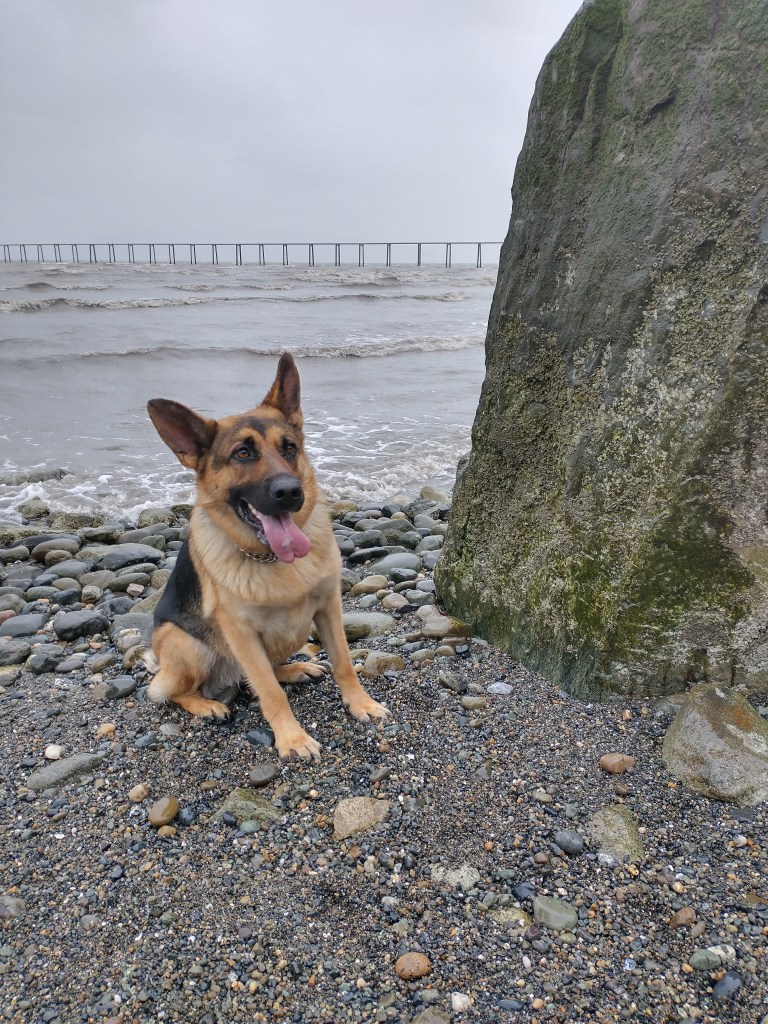
On a recent trip to the beach, my family’s German Shepherd dog Pippa cut her paw pad on some glass. It was pretty awful. Although not a deep cut, it did bleed enough to leave a trail of blood splotched all around on the stones.

We gave her first aid, and brought her home where she spent a week indoors with her foot bandaged. Pippa spent these days in dramatic sadness, unable to go for a proper walk and feeling the weight of the world upon her shoulders.

I looked online for some dog shoes for her to wear so she could go out for walks while her cut still healed. I bought a set, and she wore the front pair, galumphing around the neighborhood and sounding like a horse as she clip-clopped down the street. But the shoes worked pretty well.

What happened, though, as I was shopping for those shoes, is that I ran across something called paw wax. This is a mixture that is rubbed on paw pads to moisturize and protect. Here was something Pippa could really use. She goes hiking in the alpine areas a lot and her pads become dry and slightly cracked from walking on the granite. We’ve also had trouble in the past with ice balls building up inside the tops of her booties.

Well, through a great deal of research and experimentation, I’ve become a minor expert on paw waxes. And, I’ve gone into business. It’s impressive how well a good wax works. I realized that paw balm and wax would be a great thing to sell along with my books at fairs. I found sources for organic, fair trade, and sustainable ingredients. I perfected several recipes, each with a particular emphasis.

I’m almost ready to launch my online store. See my balms now on my paw wax page. It should all be up in early March 2024. ~~~~~The Paw Wax portion of Pupwalkies will have detailed information about paw balms and waxes and about my own waxes and their ingredients.

Update 3/10/24: My store is open! Please check out k9wax.com.